Long-term Consequences of SARS-CoV-2 Infection

A Brief Tutorial – Clinical Trials and Statistics

In yesterday’s blog post, I explained that I would begin a blog series in which we would examine studies, data and reports that are appearing in the medical literature about long-term potential harms that can result from SARS-CoV-2 infection. Let me qualify that when I refer to “long-term,” realize that the longest interval from the first known infections from this novel virus to now are not quite 2 ½ years (not a long time when it comes to viruses). It certainly may be the case that some of the health effects we are seeing now will resolve over time. It is also possible that we won’t begin to identify other health effects for years from now.

But, before I launch into this series, we need to cover some concepts so that those without a scientific or medical background can understand what we are talking about. We will start with a brief overview of clinical study design, how to interpret clinical studies, and a smattering of cell biology, virology and immunology. I promise to try to make it all interesting and not overly complicated! In doing so, my apologies in advance to statisticians, cell biologists, virologists, immunologists and all other experts in the fields for which I cannot even begin to do justice.

Let’s start by understanding clinical trials/study design. If you want to know why it is important, merely look to the drama surrounding the ivermectin clinical studies. If you don’t understand the concepts I am going to cover, you could very well look at these trials and believe that there is a lot of evidence to support the use of ivermectin in the treatment of COVID-19. However, once you understand how to look at clinical trials, you realize that the weight of the evidence is pretty convincing that ivermectin is not effective.

Here we go. There are many ways that a clinical study can be designed. They often fit nicely into a number of categories and the weight of the evidence from the study should take into account the study design.

Let’s start with a few principles:

  1. When you want to apply the findings of a clinical trial to practice, you need to know the population that was tested in the study and understand how the patient you are treating or the person to whom you are providing advice might differ. As an example, a study done to look at the health effects of SARS-CoV-2 infection in nursing home residents may not allow one to conclude that the same health effects would be seen in children or college students, or even middle-aged adults. Why? Nursing home residents would be older and the very fact that they are in a nursing home suggests that they have significant limitations to care for themselves either due to comorbid health conditions or physical limitations or both. We know that older people as well as those with certain health conditions are at increased risk for severe disease with SARS-CoV-2 infection.
  2. When we are dealing with a subject like SARS-CoV-2, it is also helpful to know what the study period was and the countries the subjects were from. If we were doing a study to measure the effectiveness of the vaccines or a monoclonal antibody treatment, this would be critical information because that effectiveness can vary depending on the variant that was circulating at the time. A test of the Regeneron monoclonal antibody treatment effectiveness was excellent early in the pandemic, but almost zero today due to the shift in variants.
  3. You will also want to look at what question the authors of the study are trying to answer. For example, when we look at COVID-19 vaccine effectiveness studies, it is very important to know “effectiveness of what?” If a study is conducted to look at the effectiveness of preventing severe disease and the authors define severe disease as the rate of hospitalizations and death, then they likely are not conducting the kind of tests that would be necessary to answer the question of vaccine effectiveness against infection or vaccine effectiveness against symptomatic infection. Let’s now say that the authors are conducting a study to determine the effectiveness of vaccines in preventing symptomatic infection. Well, then likely the study design will inform you that they only tested subjects when they exhibited symptoms. Therefore, that study will not answer the question as to how well vaccines prevent all infections, since we know that with COVID-19, many people have no symptoms or symptoms that they don’t realize are cause for testing. If we wanted a study to evaluate how effective the vaccines were in preventing all infections, then we would vaccinate subjects and then routinely test them to look for evidence of infection regardless of how they felt.
  4. Finally, we need to be careful about not confusing an association with causation. When I was early in my medical practice, an observational study had found that treating menopausal women with hormone replacement led to better cardiovascular outcomes. So, we all prescribed women hormone replacement treatment referring to its “cardio-protective effect.” Years later, randomized controlled trials demonstrated that at best the effect was insignificant and at worst, the hormone replacement treatment was actually placing women at risk for worse cardiovascular outcomes. We’ll discuss these different types of studies below, but why would they come to such different conclusions? Observational studies are prone to identifying associations rather than causation. In this case, women who were most likely to seek and receive hormone replacement treatment at that time were in higher socioeconomic strata, with better access to health care, better nutrition, less likely to be smokers and more likely to belong to a gym or participate in regular exercise, and all of those factors would likely have contributed to those study participants’ lower risk for cardiovascular disease.

Types of clinical studies:

  1. Randomized trials – These are generally the highest quality trials and ones that are better designed to answer the question of whether something is an association or a cause. These trials are of higher quality because they divide study participants into groups of test subjects and so-called “controls.” The test subjects will receive an intervention, let’s say a vaccine, whereas the control group receives perhaps an injection of normal saline. We call the trial randomized because we take all the people who have signed up for the trial and “randomize” them into one of these two groups. Often that is done these days with the benefit of a computer. The best studies will make sure that the two groups look as similar as possible, e.g., same age ranges and average age between the test group and the control group. We can even make these studies better when the study participants are “blinded,” that is to say they don’t know whether they are receiving the intervention or a placebo. Why would that be better? Because people can filter the symptoms they report or their perception of how they feel based upon whether they believe they are being exposed to something or treated with something. We can make it even stronger by making the study “double-blinded,” meaning that neither the study participants nor the investigators know whether someone has received the intervention or the placebo, because now the investigators do not filter the evaluation of the study participants based upon knowing whether they received the intervention or not.

Let’s take a real-life example to see why a randomized trial can be so helpful. No doubt you heard a few doctors who stated something to the effect that “I treated all my COVID-19 patients with ivermectin and they all did great!” So, is that pretty good proof that ivermectin works? No, because maybe they treat a young, healthy population that was going to do great anyway, whether they received ivermectin or not. We would need to know more – how many patients did they treat, what were their conditions when they began treatment, how did they follow them up and for how long, how do they know whether any of these patients got sick and went to a hospital or died? This is where having a control group helps you answer this question.

Suppose I told you that I told all my friends to eat an orange every day during the pandemic and none of us got COVID. Does that mean that an orange a day will prevent COVID? No, because you don’t know the characteristics of my friends. They are likely older individuals and may not have school-aged children in the home. They are likely to be in health-care related fields and probably more likely to mask, avoid large crowds and get vaccinated.

  • Observational studies. These are studies where we don’t make an intervention, but rather just observe differences between groups to see if there are different outcomes. These studies are prone to errors and particularly to identifying an association or correlation rather than causation. That doesn’t mean that they aren’t helpful and can’t provide us with insights. An observational study could be comparing COVID-19 disease transmission rates in a school with a mask requirement against a school without one.
  • A common type of study we will look at will be a case-control study. In these studies, we are usually comparing a group with the disease or condition to a group without. For example, we could follow a group of college athletes who got COVID-19 and compare their exercise tolerance with a group of college athletes who did not report getting COVID-19 to see if there are differences.

There are a number of other refinements of how studies can be designed, but I think this gives you a sufficient background for now.

Let’s finish with a few concepts from statistics as to how to interpret the findings of a clinical trial.

With apologies in advance to any statisticians who may read this for the extreme oversimplification, when we look at the results of a clinical trial, we want to know how likely these results could have happened by chance. For example, if I want to know what percentage of the population has blue eyes, it is not practical for me to check every person’s eye color. But, if I have a representative sample, it is possible to get to this percentage number. The key is “representative.” If I just sample people in my neighborhood, that is unlikely to be representative of the entire population. So, when we look at the results from studies, we look for statistical measures of how likely these really are “statistically significant” results and if we repeated the experiment 100 times, how wide of a range of results might we be likely to get?

So, in determining statistical significance, we often look at the “p” values. A p-value represents the probability that the sample result was produced from random sampling of a population, given a set of assumptions about the population. When we make an intervention in a clinical trial, we are usually hoping that the result of the prevention or treatment would be unlikely to occur randomly in a population. For example, if we vaccinate 1,000 people and 2 people develop Bell’s palsy, is that similar to the rate of Bell’s palsy in the general population (i.e, might have occurred by chance) or is it significantly lower (maybe the vaccine helps prevent the occurrence of Bell’s palsy) or is it significantly higher (maybe the vaccine causes Bell’s palsy as a adverse event)? Statisticians (I am told) consider a p-value of 0.05 or less to be statistically significant. In clinical trials, we look for much lower p-values (in the thousandths) to give us confidence that a treatment really works or really doesn’t work. For example, if we had a randomized, control trial with the study group taking an antibiotic and the control group just using symptomatic treatment (rest, anti-inflammatory medications, etc.), and the outcome in the antibiotic-treated group was superior to the control group with a p<0.001, then we would feel very confident that the antibiotic worked with the p-value telling us that if we repeated this trial 1,000 times with just symptomatic management, we would only get the result we did with antibiotics at most one time.

The other very helpful statistical tool in interpreting how much to rely on the results of a study is the confidence interval (CI). People will recall that when the initial results for COVID-19 vaccine efficacy came out, one of the trials showed that the efficacy was 94.1%. People threw that number around like it was handed down from above. However, if you repeated that study many times, you wouldn’t end up with exactly the same result because there would be different people in different studies. For example, another trial might give us 92% and another one 95%. Statisticians can calculate an interval 95% CI, a range of numbers that we can be 95% sure contains the true mean for the population. So, for example, the result might be 94.1%, but then we can look to the 95% CI, and let’s say that is 92 – 97%. That would mean that the vaccine efficacy could realistically be as low as 92% or as high as 97%. Now, 95% confidence intervals also help us judge how much “confidence” (pardon the pun) we should place in the results. If a clinical trial shows that the effectiveness of a treatment is 64%, but the 95% CI is 33 – 76%, then we know that we cannot place a lot of trust in the 64% number, because it could be a little as half that. When the confidence interval is that wide, usually, in my experience, it means that the study population was small.

The most common statistic we are going to look at when we look at the subject of adverse health effects following COVID-19 will be risk ratios. We will see several versions. One will be relative risk (RR). This is the risk of one population relative to the risk of a different, or in terms of our study group and the control group, the risk of developing an outcome in the study group vs. developing the outcome in the control group. Back to my vaccine example, if the rate of development of Bell’s palsy in the vaccine group was the same as the rate of developing it in the control group, then the relative risk is 1 and the vaccine is unlikely to be the cause of the Bell’s palsy. Another ratio we will deal with is the odds ratio – the odds of an outcome occurring vs. the odds of it not occurring. For example, we will look at a study that shows 20 adverse cardiovascular events that can occur as a result of SARS-CoV-2 infection and for each event, there will be an odds ratio indicating how much having COVID-19 elevates the odds of you developing a cardiovascular condition than had you not had COVID.

Well, this very basic level of understanding is pretty much all you will need to understand the clinical studies we are going to review in this blog series. Now that I have probably irritated all the statisticians out there with my oversimplification, and probably not technically correct explanations, with the next blog piece, I will see if I can similarly irritate the biologists, virologists and immunologists. But, that will be our last tutorial, and then we are ready to dive into the studies!

What if you Survive COVID-19?

In medicine, death is commonly considered the worst outcome of illness. As a physician, I have taken care of patients whose conditions and sufferings made their ultimate deaths merciful. Despite my efforts over the past two years to bring awareness to the potential long-term health consequences of having COVID-19, the discussion about COVID-19 has all-to-often been a binary one – you survive or die. But for 10 – 30% of those who have survived COVID-19, they will tell you that they didn’t get their lives back, even though they survived. They suffer from what has been called colloquially, “long COVID” or medically, “post-acute sequelae of SARS-CoV-2 Infection” or “post-acute sequelae of COVID-19 (PAS-C).” In some tragic instances, the health effects following recovery from the acute infection have been so disabling that the person has taken their own life.

The problem with discussing PAS-C is that we don’t yet have a set of criteria for the diagnosis, so studies and reports in the literature may establish different inclusion criteria. Even more concerning to me are all the changes to anatomic structures, physiologic functions and the immune system we are detecting following infection, but don’t yet know whether these changes are reversable or permanent and what problems they may cause long-term, if any.

We also don’t yet know, and likely won’t for years, what all the long-term consequences of infection other than PAS-C may be. As an example, the human papillomavirus (HPV) is the most common sexually-transmitted infection in the U.S. An association between cervical cancer and sexual activity had long been suspected. It was epidemiologically established in the 1960s. HPV was then first identified in cervical cancer specimens in 1985. The role of HPV in causing cervical cancer was then established in the 1990s and the first vaccine to guard against HPV infection was then available in 2006. As another example, the Epstein-Barr Virus (EBV) was first discovered in 1964. In 1968, we determined that EBV was the cause of infectious mononucleosis. In 1976, we established that EBV was the cause of a specific type of lymphoma. Since then, we have identified its causal relationship to a number of other cancers and just this year, we finally established that EBV plays a causative role in the development of multiple sclerosis (MS), raising the possibility that we might be able to eliminate the risk of developing MS by developing a vaccine to prevent EBV infection.

This all becomes a critical issue because I constantly am asked by people whether to take certain steps to prevent COVID-19 infection when they perceive themselves to be at rather low risk for dying. I find that few people are weighing the risks of chronic health conditions resulting from COVID-19 because it is seldom talked about and we don’t yet know what those risks are and who specifically is at risk for developing them. Further, I find that physicians and public health experts often are reluctant to talk about these risks because we don’t yet know much about them and many are hesitant to mention these issues for fear of being accused of fear-mongering or for ultimately turning out to have been wrong.

So, I am starting an entire blog series on what we know, what we think we know, what we are seeing and what we fear could be long-term health implications from having been infected with SARS-CoV-2, and most recently, fears related to people being repeatedly infected with SARS-CoV-2.

I am dedicating this series to my mom – Charlene Pate. I told my mom some time ago that I was thinking about doing such a blog series. She thought this would be great. In fact, she has friends with various issues following COVID-19 and she knew that many were interested in answers and were loyal readers of my blog.

As I dealt with the other demands on my time, I kept putting this off and putting it off. Its not easy to explain this to the public. Many of these studies are complicated and will take a lot of effort on my part to try to make them understandable. Other studies show concerning things, but we don’t know what they mean. Nevertheless, my mom kept asking me and gently pushing me in the ways that moms do. So, now I am embarking on this intimidating subject matter and I do so dedicating this to my mother who has always been my supporter and encourager. Thanks, Mom!

Now, before we go further, let’s set out the understandings:

Here’s what I am committing to:

  1. I have no agenda here. I am not trying to get anyone to do anything. I am not advocating for mask or vaccine requirements or mandates as part of this blog series. The purpose of the blog series will not be to scare you into wearing masks or getting vaccinated. While I often have opinions and usually freely share them, this blog series will not be for opinions. I am just going to try to share studies, data and facts. You can do with them what you will.
  2. I am going to present a lot of information. I will try to provide plenty of references for those who want to read the studies for themselves or want to learn more.
  3. I am going to try to translate the medical and scientific terms for you as much as I can, but I am sure that there will be terms or phrases I will overlook, so feel free to submit a comment asking me to explain whatever the term, phrase or concept is that you don’t understand. And, if you don’t understand it, that means many others reading it won’t understand it, so you will be doing them a favor by asking.
  4. I am going to try to resist editorializing or adding my opinions to these blog posts. However, this will be hard for me to do and I may slip.
  5. Keep in mind that just because a study shows x or y happens, it doesn’t mean that will happen to you. There is still a lot we don’t understand about this virus and the disease it causes. What will or will not happen in the event you have been or will get infected has a lot to do with your age, your gender, your underlying medical conditions, your genetics, the specific variant you were or will be infected with, the dose of virus you were infected with, whether you were vaccinated prior to being infected, whether this is a reinfection, whether you were treated with antivirals in a timely manner, and no doubt many other factors.
  6. I am a board-certified internal medicine physician. I know a little about a lot of diseases and a lot about a number of diseases, but I don’t know everything about anything. So, I may from time to time make a mistake or I may overlook a point that a specialist in a particular area would think important. Therefore, I invite experts in all of these various specialties, as well as virologists, immunologists and other scientists to please write in comments to either correct me or to amplify some points with my readers. I will share those comments with you, correct any of my mistakes and may even write further about an area that I am getting a lot of comments about.
  7. Science evolves. Sometimes science proves something we thought we knew wrong. Sometimes, science further explains or gives us new perspective on something that we already know some things about. This is certain to be the case with this blog series. I may present a study next week that may be corrected, clarified or expanded upon next month. If so, I will update you.
  8. I probably read studies 4-5 hours a day on average. Even so, I miss plenty of them. So, if I miss something that you have seen or think is important, send me the link in a comment.
  9. Some of the studies I will cite to will be peer-reviewed and published in respected journals. Because this area is so rapidly evolving, I will also be presenting some studies that have not yet been peer-reviewed. Obviously, if I have already determined that I think there are concerns with the study, I will not use them. However, keep in mind, when I am presenting a study that has been published on a pre-print server, but not yet peer-reviewed, you should realize that reviewers might subsequently find issues with the study.
  10. This effort is already so overwhelming for me that I am not sure how much I will get into the study methodology and study design or limitations of the studies, but I will certainly make an effort to try to remember to do so. I’ll also try to remember to address some of the statistical methods that we use to help you in interpreting the data without making you think you are taking a statistics class.
  11. I am going to try to present these studies and the information we are getting in some kind of logical manner – I suspect by writing about the organs or organ systems that are involved, e.g., a blog on cardiovascular effects, another on neurological effects, etc. But, please understand that in medicine, these distinctions can be blurry. For example, a stroke is generally thought of as a neurological problem, but some strokes are caused by cardiovascular issues. So, I am sure that my efforts to categorize these findings will not be perfect and will overlap between blog posts.
  12. No doubt, I will write something about an organ system and then something new will come out weeks later. So, I may end up revisiting a prior blog post and if the article is significant enough, I might devote an entire blog piece to that article.

Now, here is your part:

  1. Please be sensitive to other readers. There are many who are suffering with profound effects that they don’t understand and they are looking for answers, and more importantly, hope. Please be kind. Please don’t diminish what they are experiencing and what they are feeling. If you have had COVID and you feel 100%, then thank your lucky stars, but don’t dismiss what others are experiencing.
  2. Keep things in perspective. Just because I share a study with some concerning health effects doesn’t mean that you have them or will get them. It doesn’t even mean that if you have similar symptoms that whatever I am presenting is what is wrong with you. The same symptoms can be caused by wildly different disease processes, for example, light-headedness and dizziness upon arising from bed can be POTS (we’ll cover that in an upcoming blog piece) or benign positional vertigo involving entirely different body systems and treated entirely differently. So, don’t self-diagnose from these blog pieces. Certainly, feel free to point it out to your doctor and inquire whether this might be applicable to your case, but don’t assume so on your own.
  3. As I stated above, I am just going to try to present studies, data and information. If some of it upsets you, I am sorry; that is not my intent. But, like I will stick to facts, I will ask you to do so as well. This is not the place to voice your skepticism of the virus, who or what is responsible for it, what the government is or is not doing, or the latest conspiracy theory. There are other venues for that. This blog series is merely an effort to try to equip people with knowledge so that they can make their own health decision in a more informed manner.

So, for the next blog piece, I will cover some terms and concepts that you will need to understand for almost all of the studies we are going to review.

Is COVID-19 now an endemic disease?

The problem in answering this question is that there are no precise definitions or criteria for determining whether a disease is endemic. But, generally, public health professionals refer to a disease being endemic when it is present throughout the year in relatively low and stable levels, and does not result in unexpected surges that would overwhelm health care capacity. The CDC defines endemic as “the constant presence of an agent or health condition within a given geographic area or population.”

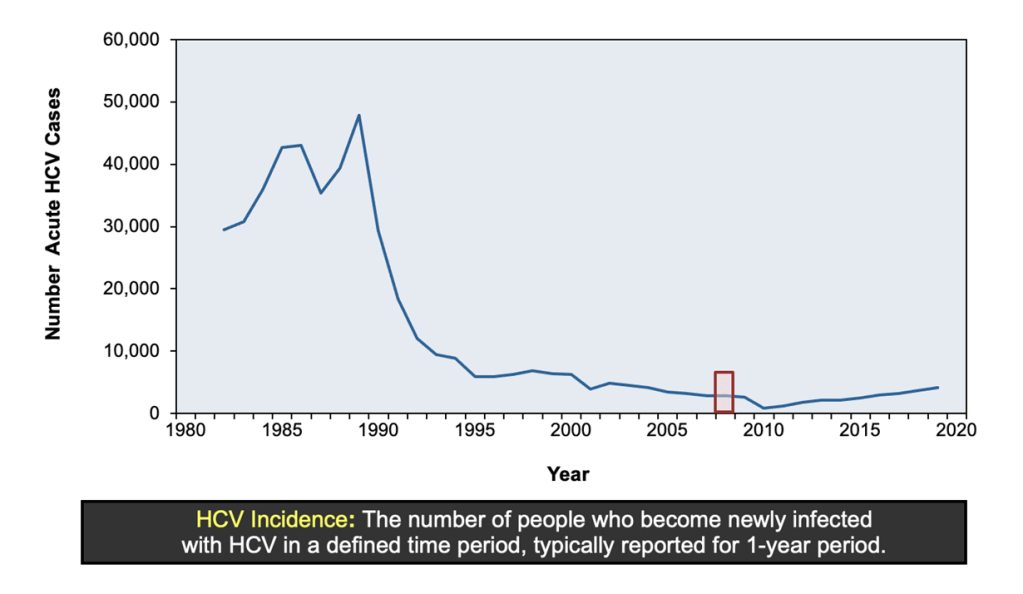
I think it is helpful to better understand this by considering an example. I suspect that most all experts would agree that hepatitis C infection has been endemic in the U.S. since its identification and our ability to test for it in the early 1980s. To see this visually, let’s look at the epidemiologic curve “epi curve”) for hepatitis C. This is a graphic representation of the disease prevalence or disease transmission by plotting the number of cases along the ordinate (y-axis) and the progression over time on the abscissa (x-axis).

What you can see here is what would otherwise appear to be an unexpected outbreak or epidemic of hepatitis C over the decade of the 1980s. But, in reality, this was the result of testing the population for hepatitis C (screenings including blood donations and testing of those with liver disease) with newly developed testing and finding many people who had previously been infected. In other words, these were not all new infections.

Once we identified all of these previous infections, but continued testing, you see that from about 1995 on, we are identifying a relatively stable number of new infections every year. The epi curve from 1995 on gives us a typical graphic display of an endemic disease.

We can look at a different example – measles. Measles was quite common in the U.S. and is highly infectious, but an effective vaccine was developed and the U.S. made a concerted effort to eliminate measles from the U.S., which we did in 2000. That doesn’t mean that we don’t ever see measles cases, but these generally occur in people returning to the U.S. who are unvaccinated and infected in another country, or in groups of unvaccinated individuals when one of these travelers returns and is in contact with these unvaccinated individuals, often at school or in religious communities. Let’s look at Australia’s epi curve for measles.

The epi curve, reading left to right shows you the disease activity of measles in Australia prior to a national vaccination effort to control measles (Measles Control Campaign- MCC), then the disease activity during that campaign in the middle of the epi curve, and then the manifestation of measles as an endemic disease at the right of the curve following the campaign. Notice that when endemic, there still is some variation, but you no longer see the wide swings and surges that you see on the left hand portion of the epi curve.

So, now let’s look at the U.S. epi curve for COVID-19:

It should be immediately apparent to you that this is not representative of an endemic disease. This epi curve demonstrates a series of surges followed by low levels of disease transmission followed by more surges, and in fact, the most recent surge having been our largest yet. Another way to answer the question as to whether COVID-19 is now endemic is to ask whether the disease activity has (1) been predictable, (2) been relatively stable, and (3) has avoided overwhelming the health care system. I think the answer to all 3 would have to be no.

Well, if COVID-19 is not yet endemic, will it become so? I am not so sure. Remember the measles epi curve for Australia above and the development of an endemic following a vaccination campaign? Now, look at the U.S. COVID-19 epi curve and realize that we started our COVID-19 vaccination program in early 2021. Does it look like the pattern is evolving towards an endemic one? I don’t think so.

So, let’s look at the epi curve for another viral infection:

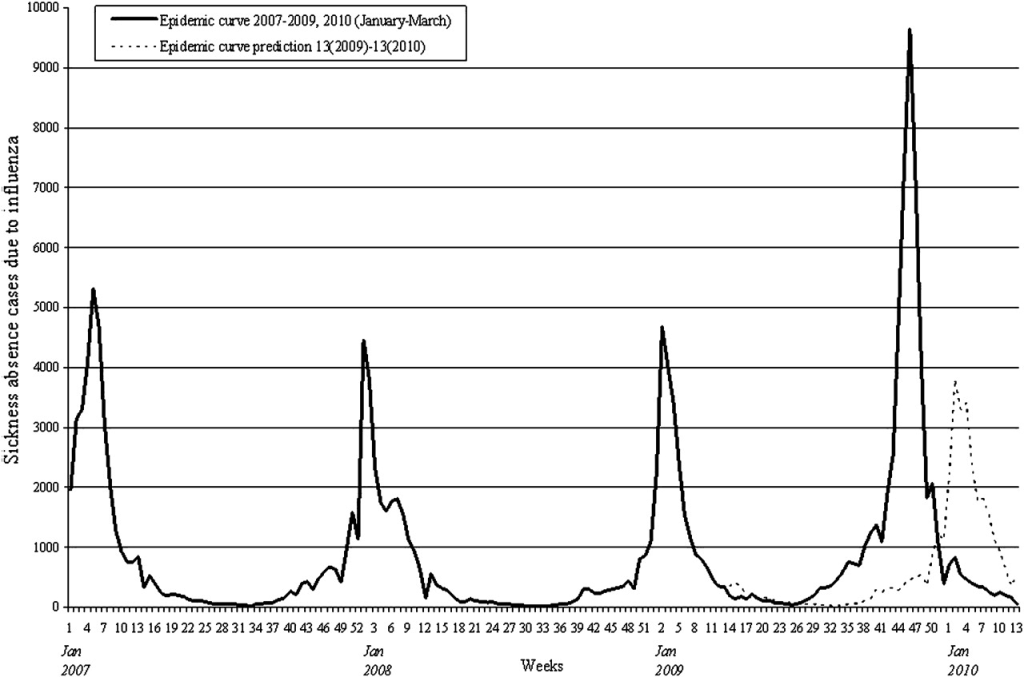
This is the epi curve for influenza from 2007 – 2010. Influenza is seasonal with fairly predictable times for outbreaks each year depending upon where in the world you live. Some people suggest the COVID-19 is also seasonal, but you can look back to the epi curve for COVID-19 above and see that it clearly is not. This influenza epi curve demonstrates an annual recurring epidemic. It returns each year and infects large numbers of people because that virus mutates frequently and not enough people get influenza vaccinations.

So, do you think that the COVID-19 epi curve looks more like (1) the U.S. hepatitis C epi curve and the Australian measles epic curve after the vaccination campaign, or (2) like the influenza epi curve? If you answered (1), then you would be in agreement with those talking heads that want you to believe COVID-19 is already endemic (though I would recommend an eye examination!). If you answered (2), then you understand why I disagree that COVID-19 is currently endemic. You may also now understand why I am not sure that it is headed towards being endemic, but rather I anticipate that it will be epidemic (like the influenza epi curve, though not seasonal) for the foreseeable future.

Of course COVID-19 might become endemic at some time in the future. It could be that a future variant might produce long-term natural immunity. It could be that much larger numbers of people will choose to get vaccinated. It could be that new vaccines will induce longer-term immunity. Lots of things could happen, but until something does, I don’t expect our epi curves over the next year or two to look like hepatitis C, but rather more like influenza, but with more frequent surges since COVID-19 is not seasonal (at least not at this time).

The Problem with the CDC’s New Mask Guidance

The CDC published their last Science Brief on the Community Use of Masks on December 6, 2021. https://www.cdc.gov/coronavirus/2019-ncov/science/science-briefs/masking-science-sars-cov2.html. At that time the CDC recommended the use of masks to “prevent transmission of SARS-CoV-2” especially in light of asymptomatic and pre-symptomatic disease.

Here are the benefits of that strategy:

  1.  Decreasing transmission decreases the potential for new variants of concern, which as we have seen have tended to become more transmissible with each new version and most recently developed some degree of immune escape/evasion, making protection from prior infection and vaccination less effective and making some of our therapies less effective or not effective at all.
  2. Decreasing transmission rates benefit those who are vulnerable (the elderly, those who are unable to be vaccinated, those with underlying medical conditions, the immunocompromised and those in institutional settings [nursing homes, prisons]) safer because the chance of encountering someone who is infected in their own families or when out in public is diminished.
  3. Decreasing transmission is also beneficial with a virus that is capable of causing long-term complications and disability.

Now, the CDC states that “community measures should focus on minimizing the impact of severe COVID-19 illness on health and society.” So immediately, you can see that the focus is no longer in preventing illness, but rather preventing severe illness. However, the strategy isn’t great for achieving that goal, because often the people who spread the infection to those who are at high risk for severe infection are those who are not themselves at high risk.

Dr. Walensky (Director of the CDC) stated, “This new framework moves beyond just looking at cases and test positivity to evaluate factors that reflect the severity of disease, including hospitalizations and hospital capacity, and helps to determine whether the level of COVID-19 and severe disease are low, medium, or high in a community.” In principle, I don’t disagree with this. I have always assessed multiple data points and different impacts as I have assessed Idaho’s or our local risk. The problem is the significant increase in disease transmission that the CDC is now willing to just accept (see below).

She also states, “This updated approach focuses on directing our prevention efforts toward protecting people at high risk of severe illness and preventing hospital and health care systems from being overwhelmed.” My problem with this statement is:

  1. It was a lot easier to identify those at high risk of severe disease back in 2020. Very typically it was people with advanced age and people with multiple medical conditions. We became much less able to identify these people as of last year as we saw more and more people in their 30s and 40s hospitalized, and often the only risk factor, if any, was being overweight. This kind of talk also resulted in pregnant moms not appreciating that they were now in the high risk group even though they were in their 20s and 30s, and we saw all kinds of disasterous outcomes for mom and baby. And, of course, since last year, we have gradually seen more and more children becoming ill and being hospitalized.
  2. This statement focuses on severe illness and preventing hospitalization. But, what about trying to prevent long COVID, MIS-C and many different long term complications that we are beginning to understand can result even from mild infection? I fear that we will see a significant rise in long-term medical conditions in those who have been infected, and likely especially those who have been multiply reinfected, along with the attendant decrease in employee productivity and increase in health care costs, which of course will then be reflected in everyone’s cost for health insurance.
  3. Again, the point I made above – one of the best ways to prevent people from developing severe disease and being hospitalized is to prevent mild infections in younger, lower risk. Why? If you look at infections in patients in nursing homes or inmates in prison, it was not fellow patients or inmates or visitors that infected them, it was the otherwise healthy workers who got infected and brought the infection in to the patients or inmates when they came to work. A lot of grandparents and other at-risk family members took many precautions with their every day activities, but they were infected by young family members who got infected at school or other healthy family members who got infected at work or gatherings and then infected the at-risk persons at home or during family gettogethers.

So, how big of a change is this guidance?

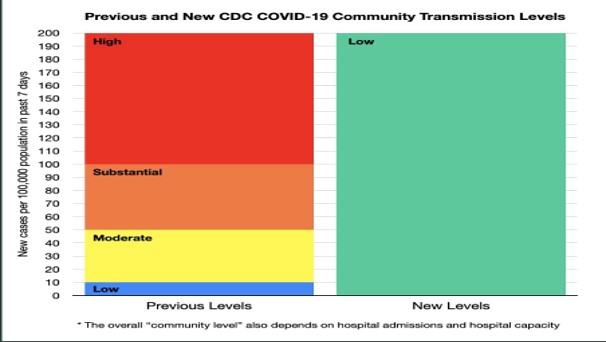
Here is our country’s risks levels immediately before the new guidance went into effect:

About 94% of the country was in areas that were high or substantial risk of disease transmission and advised to wear masks under the strategy of trying to prevent infections.

Here is the country’s risk levels immediately after the new guidance went into effect:

Wow! Now only about 30% of the country lives in areas of high transmission for which masks would be advised when the strategy is to accept a lot of infections, but try to limit overburdening of hospitals.

So, how did the risk levels fall so dramatically? The CDC accepted a higher level of disease transmission – up to 200 new cases in a week per 100,000 population. According to the CDC – the determination of COVID-19 Community Level begins by determining whether new cases per 100,000 in the past 7 days were < 200 or > 200. (For those who, like me, like to follow the 7-day moving average of daily new cases, this cut-off at 200 roughly translates to 28.6, which has generally been associated with accelerated community spread.)

One of the reasons for the CDC allowing higher transmission is that we now have more testing and therapeutics. That is true now that cases have come down so much, but ask anyone who tried to find at-home tests a month ago how easy that was and ask anyone who got sick with omicron who was at higher risk whether they were able to find an infusion center that was able to administer monoclonal antibodies or a pharmacy that had stocks of antivirals. I tried to help a number of people in Idaho and in Texas who got ill and was unsuccessful in all but one case (and, even then, I spent hours on the internet and on the phone trying to locate the treatments). What assurance do we have that we will have plenty of therapies with the next surge, assuming that the next variant is still susceptible to these treatments?

Another reason the CDC suggests as to why it can tolerate many more infections is the “high rate” of vaccination in the U.S. Really? We have 65% of the population fully vaccinated and there have been many countries with far higher levels of vaccination who have had huge surges and large numbers of hospitalizations in the past few months.

So, here are a couple of graphs that will help illustrate what a dramatic shift the CDC is making:

This next graph (an epi curve) will show you how this masking guidance would have played out had it been in effect for the entire pandemic with the surges the U.S. went through.

Here is how one social scientist paraphrased what the CDC’s new guidance was in essence stating: “It’s safe for you to take off your mask because when you get (COVID-19) there is still plenty of room at the hospital.”

I understand the loss of patience for masking by the general public. However, I fear that it is because we haven’t done a good job of educating the public that bad stuff can still happen even if you survive the infection. I talk to a number of these patients. That is why, along with the fact that I want to protect babies, toddlers, grandparents and the immunocompromised, I will be sticking to the old guidance for my own personal masking decision.

Vitamin D and COVID-19: What We Know at This Time

Vitamin D is essential for normal human functioning, but just how much is necessary has been a subject of debate and whether supplementing vitamin D in people who have “normal” levels can be beneficial in the prevention or treatment of certain diseases has been a subject of controversy for decades, largely due to the lack of high-quality studies.

While some will argue that the level of normal vitamin D should be set higher than current guidelines, I think that you would find a general consensus that an adult is vitamin D deficient if their serum 25-hydroxyvitamin D level is < 50 nmol/L or 20 ng/ml. There would also likely be agreement that treatment with vitamin D supplementation in individuals with serum 25-hydroxyvitamin D levels of < 30 nmol/L or 12 ng/ml is beneficial and very important for overall health.

Many people promoted the need for vitamin D supplementation to prevent and/or treat COVID-19 when the pandemic first began (in fact, a number of people continue to promote this idea). Unfortunately, we had little data or clinical studies at that time to answer that question. However, two years later, we know a lot more. Here are some key points:

  1. A study from Italy showed that a low serum vitamin D level was an independent risk factor for developing severe COVID-19 (mean 18.2 ng/ml) and dying (mean 13.2 ng/ml) from it, if a patient with low vitamin D gets infected.
  2. Unfortunately, studies have not been able to demonstrate that giving high doses of vitamin D once the patient with low vitamin D gets infected will reverse the risks for severe disease, hospitalization, the need for intensive care, mechanical ventilation or death.
  3. Some persons have a genetic abnormality that causes them to have high levels of vitamin D, but studies have demonstrated that these folks do not have a lower risk of getting infected or if infected, having less severe disease or risk of hospitalization and death.

Guidelines from the Endocrine Society recommend the following dietary intake of vitamin D:

  • Children aged 1-18 years: ≥ 600 IU/d
  • Adults aged 19-70 years: ≥ 600 IU/d
  • Adults older than 70 years: ≥ 800 IU/d

So, above, I have provided you with the state of the science. But now, here are my thoughts and how I put all this together:

  1. If you have vitamin D deficiency, it makes sense to take a daily vitamin D supplement. My vitamin D levels have been low and I take a daily supplement. If you have low levels of vitamin D, you may be at higher risk if infected.
  2. The fact that people with low vitamin D levels are at increased risk for severe disease if infected, but supplementing with vitamin D once infected doesn’t improve outcomes, as well as the fact that those with high vitamin D levels are not protected from developing severe disease suggests to me that vitamin D is likely only one factor in this risk for severe disease and may not even be the most important factor. Thus, if you get infected, please don’t rely on vitamin D and other supplements to keep you from getting severely ill. Seek medical attention from a physician and explore options that have been proven to improve outcomes if you are at high risk for severe disease, such as antiviral medications and monoclonal antibodies. I have no objection to taking vitamin D if you get infected, my point is simply that you should not rely on vitamin D or any other supplements to keep you from getting severely ill.

Understanding the Vaccine Adverse Event Reporting System (VAERS)

This a document that I participated in developing as a briefing document for the Idaho Legislature from the IMA’s Public Health Committee. Dr. Laura McGeorge from St. Luke’s was the lead author. I thought this would be of interest for followers of my blog.
• The Vaccine Adverse Event Reporting System (VAERS) was developed by the Food and Drug
Administration (FDA) and Centers for Disease Control and Prevention (CDC) in 1990.
• VAERS was developed to get post-vaccine data from across the country to monitor for rare
safety concerns. More common safety concerns are found in clinical trials. However, if a trial
studies 40,000 vaccine doses, for example, and a safety event occurs once every 100,000 doses,
then the event may not occur in the study. Thus, VAERS allows for continued safety oversight of
any vaccine.
• Post-vaccine information may be entered in the VAERS national repository by anyone, including
health care providers, vaccine manufacturers, patients, and their families.
• Often the information entered is incomplete and is usually not validated. Vaccine safety experts
validate the data when there is a serious event reported. To validate the information, the expert
must obtain the medical records and review them to see if the event was likely caused by the
vaccine or an unrelated event.
o For example, if a reported death was from an allergic reaction immediately after
vaccination, that death would be determined to be caused by the vaccine. If the death
was from a car accident following the vaccine, that death would not be attributed to the
vaccine. If a death were from a heart attack, that would be noted for further analysis.
• A common misconception about VAERS is that the high number of reported deaths were caused
by vaccines. Keep in mind that given the U.S. population of 330 million people, thousands of
people are born each day and thousands die every day. In 2017, prior to the pandemic, on
average 7,708 American deaths occurred every day.
• For deaths among those who received the COVID-19 vaccine, it is important to note that those
people tended to be older and were disproportionately people with underlying medical
conditions and their deaths were statistically likely whether vaccinated or not.
• The number of deaths reported to VAERS is less than the number expected and the FDA and
CDC’s review of these deaths has determined that almost all these deaths were unrelated to
COVID-19 vaccines.
• 496 million doses of COVID-19 vaccines were administered in the United States from December
14, 2020, through December 20, 2021. During this time, VAERS received 10,688 reports of death
(0.0022%) among people who received a COVID-19 vaccine.
• In reviewing data from over ten million people, comparing vaccinated versus unvaccinated
mortality rates, those vaccinated had about 30% the mortality rate of those that were
unvaccinated.
Today, the FDA and CDC use several tools to evaluate vaccine safety. VAERS is just one of the tools. The
CDC does not just depend on VAERS to monitor for vaccine safety. V-safe is a new smartphone-based
voluntary health check tool. The v-safe program now also has a pregnancy monitoring registry. In
addition, the Vaccine Safety Datalink has been in place since 1990 and is a collaboration between the
CDC and nine large health care organizations. The CISA project is a collaboration between the CDC and
seven medical research centers.

Why the Scientific and Medical Community Object to those who are Touting Ivermectin for the Prevention or Treatment of COVID-19

The scientific and medical community want the COVID-19 pandemic to end just as much, and likely more than you do. First of all, preserving health and life is why we all went into these professions. Second, we are tired and exhausted. Not only have we been subjected to the same limitations on our own activities and family get togethers as you have, but we have been caring for COVID-19 patients for almost two years now, under some of the most difficult of circumstances. If there was a magic pill that would prevent people from getting COVID-19 and treat patients with COVID-19 to prevent our hospitals from being overwhelmed, believe us, we would be the first ones championing it and promoting it to the public and prescribing it to our patients and taking it ourselves. Keep in mind that all of us worry about getting infected when we are seeing patients and inadvertently bringing the virus home to our families. So, no way would we try to prevent our family, our friends and neighbors and our communities from having access to a medication that would keep them healthy or save their lives.

  • The primary reason that we do not support the treatment of people with ivermectin for COVID-19 is that we have no high-quality studies that point to its benefit in either preventing or treating COVID-19. Those who advocate for the use of ivermectin will point to various studies that seem to suggest a benefit. However, that is not how we make treatment decisions for patients who have serious threats to their health or for whom we are recommending a medication that can have adverse effects such that the old adage might apply of the treatment being worse than the disease. We evaluate those studies to determine whether they are of high quality, in other words, results that can be trusted. This is why you will hear the phrase “peer review.” This is a rigorous process in which experts in the field review the study design, the size of the study, the process by which participants in the study were divided into the group that would receive the medication and the group that would not to make sure we are really comparing apples to apples, the data collected during the study (including the proper statistical analysis) and the conclusions drawn from those data. Unfortunately, it is not uncommon for studies to have major flaws in one or more of these elements that undermine the validity of the study or the confidence we can have in the results. Most alarming is when the authors of the study are contacted during this peer review process, but refuse to engage with the peer reviewers or their data doesn’t seem right and those peer reviewers request the data, but the request is declined. There was some of all of these concerns in most of the studies that those who advocate for ivermectin base their recommendation upon. For a very nice summary of the clinical trials that are among the better designed studies with an explanation of the findings and limitations of those trials, see https://www.covid19treatmentguidelines.nih.gov/tables/ivermectin-data/.
  • Much of the excitement about a potential therapeutic benefit for ivermectin comes from studies showing an antiviral effect of ivermectin in a test tube. In fact, this is not new information. This test tube result led to enthusiasm for the possible benefit of ivermectin to treat many other viruses in the past such as the viruses that cause HIV/AIDS, dengue fever, Zika, and yellow fever. Given that many poor countries struggle with these diseases, the potential for an inexpensive pill to treat these infections was very exciting. The problem is that the benefits we see in the test tube did not occur in humans when we conducted clinical trials, and so far, we have not seen those benefits against the virus that causes COVID-19, either. It is not uncommon for benefits that we see in a laboratory do not occur when we test those treatments in humans. That is why the FDA never approves medications simply based on laboratory tests. There must be clinical trials involving humans to ensure that those treatments are safe when given to humans (you wouldn’t see adverse effects in test tube studies) and that they actually do provide a measurable benefit when given to humans. The reasons why a medication might seem to offer hope in a test tube, but not when actually administered to humans are many because the human body and the interactions of medications with all the fluids, cells and organs of the body can seldom be predicted in a test tube. In the case of ivermectin, one problem seems to be that the level of ivermectin needed to get the antiviral effect we see in the test tube cannot be attained in human cells without excessive doses and excessive toxicity.
  • We aren’t saying that ivermectin should not be considered as a therapeutic option. We are saying that (1) it should be tried in the setting of well-designed clinical trials so that we can determine once and for all whether it has a benefit and (2) given there is no high-quality evidence to suggest benefit in either preventing or treating COVID-19, it is not responsible for those prescribing it to suggest to patients that they can rely on this drug instead of those public health measures and therapeutics that do have proven benefit in either preventing or treating COVID-19.
  • There is a large NIH (National Institutes of Health) -sponsored trial currently underway to evaluate ivermectin’s effect on the treatment of persons with COVID-19 who do not require hospitalization. We hope to have preliminary results as soon as March of 2022.
  • The biggest threat caused by many who tout ivermectin is not the prescription of ivermectin itself, it is the fact that they often encourage the use of ivermectin as an alternative to measures that are proven to help prevent COVID-19 (e.g., masks and vaccines). Unfortunately, we all too often hospitalize people who were told not to get vaccinated and that ivermectin would protect them.
  • Unfortunately, because there are some who promote ivermectin as safe and very effective in preventing or treating COVID-19, some people have resorted to ways other than being evaluated by a physician to get the drug that are not safe. As with most things that get promoted and have high demand, a black market emerges to sell products advertised as ivermectin that do not have the same safety oversight and for which the ingredients cannot be guaranteed. Others have turned to veterinary suppliers of ivermectin for animals, without understanding that the dosage recommendations for a horse can be very dangerous for humans.
  • Bottom line:
  • World Health Organization (WHO) recommendation: ”We recommend not to use ivermectin in patients with COVID-19 except in the context of a clinical trial. (Recommended only in research settings).https://app.magicapp.org/#/guideline/nBkO1E/section/LAQX7L.
  • National Institutes of Health’s (NIH) COVID-19 Treatment Guidelines Panel has also determined that there are currently insufficient data to recommend ivermectin for treatment of COVID-19 https://www.covid19treatmentguidelines.nih.gov/.
  • The Infectious Diseases Society of America (IDSA) recommends that ivermectin not be used for inpatients or outpatients outside of the context of a clinical trial.
  • Here is the most damning argument against taking ivermectin. The pharmaceutical company that makes ivermectin would stand to make huge profits if sales of its drug were promoted across the world for prevention and treatment of COVID-19. Despite this, the company has warned the public not to take its drug for this purpose because even its own scientists have seen no credible evidence that the drug has these benefits. https://www.merck.com/news/merck-statement-on-ivermectin-use-during-the-covid-19-pandemic/. It is instructive to read the results from Merck’s own analysis of ivermectin for COVID-19:
  • No scientific basis for a potential therapeutic effect against COVID-19 from pre-clinical studies; 
  • No meaningful evidence for clinical activity or clinical efficacy in patients with COVID-19 disease, and; 
  • A concerning lack of safety data in the majority of studies.

Frequently asked questions:

  1. There are doctors claiming that they have treated hundreds of patients with ivermectin who have all done well. Why isn’t this good enough evidence for the use of ivermectin?

These are called anecdotes and they are not strong enough for us to make medical decisions based on them. As an example, if I were to tell 100 of my friends to eat 10 M&Ms a day, they did so, and none of them ended up hospitalized with COVID-19, we should not jump to the conclusion that M&Ms prevent severe disease. When we are dealing with a disease like COVID-19 for which a large number of people get asymptomatic or mild disease, it would not be surprising if these doctors were treating 100 or 200 healthy, young adults with ivermectin that they would not develop serious illness, and would not have developed severe illness even if they weren’t taking ivermectin.

2. What would be the harm in taking ivermectin?

While the majority of people would probably tolerate prescription strength ivermectin perfectly well, like all medications, some will experience adverse reactions. But, the bigger harms are not related to the ivermectin itself. If it turns out that ivermectin is not effective, will people taking ivermectin take chances they otherwise would not assuming that they are being protected by the ivermectin only to end up sick and perhaps severely so? Are people taking ivermectin to prevent COVID-19 instead of the vaccines that are proven to help prevent COVID-19? One doctor who touts the benefits of ivermectin got infected with COVID-19 and indicated that it was likely due to the fact that he missed a couple of doses of the medication while traveling. Patients often miss doses of their regular medicines. If missing just a couple of doses of ivermectin can lead to infection, how practical of a solution is ivermectin compared to getting vaccinated? If you have to continue taking ivermectin for years to prevent getting infected, then that will add up in costs for a medication that has no evidence of benefit and further, we do not know the long-term adverse effects of ivermectin, since ivermectin is intended for short courses of treatment of certain conditions.

Identifying Disinformation – Part V

I am going to bring this series of blog posts on identifying disinformation to a conclusion. In this part V, I will summarize the key messages from the first four blog posts and add a few other pointers.

During this pandemic, those of us dedicating significant amounts of time to educate the public found that we still couldn’t keep up with all the false information. In this case, I am referring to addressing “disinformation,” the spread of incorrect information with the intent to harm, confuse, mislead, or otherwise affect people’s hearts and minds to accept lies and/or support the position of those who are spreading the false information. This is opposed to “misinformation” that is incorrect information, but the person spreading it did not realize that the information was incorrect or incorrect at the time. Whether it be misinformation or disinformation, the other thing we found is that combating it was like playing the game whack a mole, in that every time we successfully countered incorrect information, new misinformation or disinformation popped up to replace it. Because of this, we cannot successfully win this battle for truth on our own; we must educate the public how to recognize suspicious information. Fortunately, we had so many examples of people spreading disinformation that patterns that can alert us to disinformation emerged.

Disinformation comes from many sources, including foreign countries. The motives of those who spread disinformation can be diverse. For a foreign country, it often is the intent to sow distrust in the U.S. government and discontent among the populace. For home-grown purveyors of disinformation, perhaps they stand to financially benefit, sometimes there are political aspirations or motivations, and sometimes these sowers of disinformation like the public attention and adoration they receive from those who want to believe the lies. There may be other reasons as well. But, a common thread was narcissism and lack of empathy. These persons do not care if they harm others so long as they gain whatever benefit it is they are seeking for themselves.

What are the patterns that can alert the public to be suspicious of the information being conveyed?

  1. Credentials.

We often saw that physicians and other health professionals who were promoting misinformation and disinformation were not in specialties that generally treat patients with COVID-19 or have expertise in treating acute infections, respiratory disorders and hospitalized patients. Examples were pathologists, neuroradiologists, ophthalmologists and chiropractors. Certainly, that does not mean that the physician may not have very specialized knowledge about COVID-19, but this should be a red flag when that advice is contrary to physicians who are specialists in those areas of practice in much the same way that a dermatologist offering advice about prenatal care that is inconsistent with information put out by the American College of Obstetricians and Gynecologists should be suspect.

2. The use of grandiose, overly dramatic or inflammatory language.

Reputable physicians and scientists generally try to maintain objectivity and professionalism. It would be greatly out of character for these experts to use inflammatory or offensive language in explaining science or public health recommendations to the public. On the other hand, one physician who was spreading disinformation repeatedly referred to the COVID-19 vaccines as “needle rape.” To compare vaccination to one of the most psychologically and physically traumatizing events that can happen to a person is beyond the pale and offensive in its trivialization of the dehumanizing trauma that these victims of sexual assault have suffered. The language is obviously intended to inflame the hearts and passions of those they are spreading disinformation to rather than to stimulate the mind. We also heard many of those spreading disinformation about the vaccines using language to conjure up images of Nazi Germany, making reference to the Nuremburg Code, and often using variations of the phrase “crimes against humanity,” all of which were intended to create a false equivalency between vaccinations and various historical atrocities. When you hear or read this kind of language, a red flag should be raised to suggest that an attempt is being made to emotionally manipulate you and that the information is likely unreliable.

3. The use of emphatic and absolute statements.

There are very few things that we can say are absolutes in medicine – always happen or never happen. That is because diseases can manifest themselves and behave differently between children and adults, between young adults and the elderly, between men and women, between the immunocompromised and the healthy, and even in individuals of the same age and gender. So, another warning sign is when sources make statements that are absolutes. Physicians and scientists will often qualify their statements and advice – “based upon what we know today” (understanding that new data may come along in the future that could change our understanding of the disease or its treatment), or “based on a recent study” (leaving open that more studies or larger studies might change our understanding), or “based on the limited data we have available” (acknowledging that we have some data, but it may not apply to people that are different than those who were study participants, or to people with additional medical conditions than those studied). An example of an absolute statement that should raise a red flag that we heard during this pandemic was “masks do nothing.” Now, we can debate the effectiveness of different kinds of masks, their effectiveness under different conditions, or the effectiveness with different variants, but if someone tells you masks provide absolutely no protection or if someone tells you that masks provide complete protection, this should be reason enough to look for another source.

Another very helpful indicator as to whether you can trust a source is that reputable physicians and scientists will often answer questions when there is a new development with some variation of “we don’t know” or “we need more information before we can answer that,” whereas those spreading disinformation rarely answer questions by admitting that the science is evolving or that it is too early to answer the question with any certainty.

4. The use of anecdotes as evidence.

We often heard those promoting misinformation making comments such as “I treated [fill in the number] patients with ivermectin and they all did great.” That is an anecdote; that is not science. Were all of those patients young, healthy and low risk and would be expected to have good outcomes even without treatment? Did all of them have confirmed infection? How do you know none of them deteriorated and didn’t go straight to the hospital without notifying you, especially since a number of physicians making this claim did not treat patients in hospitals?

5. Internal inconsistencies in their arguments.

Think about a person in an interrogation room at a police station. A skilled detective can tell when the person is being truthful, because truth has internal consistency to it. The various pieces fit together and make sense that they would occur in the manner and the order the witness describes. On the other hand, when you can get a person to talk for an extended period of time and that person starts out with a lie, it is incredibly difficult to maintain the lie because things eventually don’t make sense and cannot be connected in a logical way. So, too, if you give someone spreading disinformation enough time to talk, you will generally see them get tripped up. Let’s look at an example. A very common internal inconsistency arose when some doctors made the argument that people should not take the COVID-19 vaccine because it was only authorized for emergency use, but not yet fully approved by the FDA. That could certainly be a reasonable concern for some people and worthy of discussion. However, what they suggested as the alternative, and what patients seemed more than willing to do, was to take various medications that were neither authorized or approved by the FDA for prevention or treatment of COVID-19. In fact, the FDA even warned the public not to take one of the recommended medications. The inconsistency was using FDA approval as the criteria for prevention of COVID-19 and using it to arguing against one measure, but then disregarding it in recommending another.

6. Misuse of data.

One common tactic used to create fear of getting vaccinated was for purveyors of disinformation to point to the thousands of deaths reported to VAERS (the Vaccine Adverse Event Reporting System) as being due to the vaccines. This would make sense to the majority of Americans who are not familiar with VAERS, but can tell from the name that this is a system that reports vaccine adverse events. But, this was intentional deception by the physicians who were suggesting causality, when in fact, the site is for reporting by the public so that the CDC and FDA can be alerted if the frequency of an adverse reaction exceeds the background rate of those symptoms or conditions. Prior to the pandemic, more than 8,000 persons in the U.S. die each day on average. To keep the math simple, if you consider that about half of the U.S. was vaccinated this year, you would expect roughly 4,000 deaths each day unrelated to COVID-19 among the vaccinated, in fact, even higher than 4,000 because those being targeted for vaccination were the elderly and those with underlying medical conditions. Those perpetuating fears of vaccination attributed all of the deaths in VAERS that would be expected under pre-COVID conditions and unrelated to COVID-19 and the vaccines to the COVID-19 vaccines. Even just resorting to common sense, if the FDA temporarily stopped vaccinations with the J&J COVID-19 vaccine when only three cases of Thrombosis with Thrombocytopenia Syndrome were identified through the VAERS reporting, it should cause everyone to question that the CDC and FDA could then believe that there were thousands of deaths caused by the vaccine, yet take no action or even issue a warning.

7. Failure to cite studies and identify any limitations to those studies.

It is not uncommon for purveyors of disinformation to indicate that studies show support for their position, but then not produce those studies when asked. Further, we have never heard these disseminators of falsehoods ever describe any limitations to the studies they are referring to. Reputable physicians and scientists are always willing to provide the evidence for their statements or opinions. They also are quick to point out limitations of these studies, such as patient selection or study design, and usually will provide caveats that we cannot be certain that the findings will apply to patients that are different than those who made up the study participants or who are treated under different conditions than those used in the study.

Health professionals can certainly have differing opinions about the best treatment for a particular patient. These differences can arise because clinical trials have not yet provided us with evidence of the best treatment or because the particular circumstances of the patient are different than those who have been enrolled in clinical trials. These professional differences of opinion are appropriate.

My objection is to health professionals who offer the public and their patients advice that is clearly and demonstrably erroneous, contrary to the guidance of the CDC, FDA, professional associations and their own peers, and has great potential to harm patients. At the heart of this, physicians always have a duty to act in the best interests of our patients and we have an obligation to inform our patients and tell them the truth, as best we understand it. Lying to and deceiving patients should be abhorrent to physicians.

We are starting to see physicians held accountable for purposeful and repeated dissemination of disinformation. I believe appropriate actions can include discipline by state medical boards, loss of hospital privileges and revocation of board certification.

However, the disciplinary process is a lengthy one because of the need for investigations and hearings. In the meantime, it is essential for the public to be aware of the red flags of disinformation that we have listed above in order to protect themselves until the system can, because in an internet and social media age, disinformation spreads faster than the virus.

Identifying Disinformation – Part IV

This blog series is intended to help readers in identifying when you should be suspicious that information you are being provided is intentionally false and/or misleading. I am not trying to strong-arm anyone into making a decision that they don’t think is right for them; I am merely trying to avoid people making decisions that they may regret because they believed disinformation and based their decisions on incorrect information. I believe that if we equip people with the true facts, they generally will make the right decision.

In the prior post, I warned people to be on the look-out for sources that use overly dramatic or inflammatory language and I provided you with a number of examples. Reputable doctors and scientists try to remain objective and professional, and therefore would not be expected to use that kind of language.

Now, we will look at another warning sign: The use of unqualified absolute statements.

Science evolves. Therefore, beware of sources who when speaking about a novel disease that we are still learning about, make dogmatic statements without qualifications to those statements such as “based on this recent study, based on limited data, based upon what we know at this time, etc.” Reputable doctors and scientists know that when we are learning about a new disease or condition, we often find that things change as we see the disease or condition play out in more people of different ages, socioeconomic groups; different genders, races, or ethnicities; and with different underlying medical conditions. So, if the source doesn’t admit that they have been wrong about anything in their evolving understanding of the disease or doesn’t qualify their statements as above, acknowledging that our understanding may change as we get more and new research in, then you should be very suspicious of the reliability of that source.

Diseases often affect children differently than adults, young adults differently than the elderly, and immunocompetent persons different than those who are immunocompromised. Reputable doctors and scientists realize this. Therefore, when a source makes dogmatic statements that he or she applies to everyone, that too should cause you to scrutinize what they are saying before you accept it.

Similarly, I can’t think of any medication that is completely safe and completely effective. So, when someone promotes a treatment as being so, that would be a good time to look to a more trusted source for information.

Let’s turn to Dr. Cole again for some examples.

  1. “We have never tried an mRNA vaccine in humans before.” This is one of his easiest false statements to debunk. Notice the warning signs. “We have never…” An absolute statement with no qualifications, other than at the end of the sentence where he states, “in humans,” leaving open the door that perhaps they have been used in animals. Also notice that the statement is also used to promote fear. But, is it true? No. In the past decade, mRNA vaccines have been developed for avian influenza, cytomegalovirus, Zika, Chikungunya, Ebola and Rabies and all of these have been administered to humans in clinical trials.
  • Dr. Cole also expresses concerns about the large numbers of people being vaccinated, “with no ability for recompense if injured or in case of death.” Again, notice the absolute and unqualified statement – “no ability” for those who have been injured to be compensated. That sound doubly scary – you could be injured or die and you or your family would receive no compensation. Can that be true? No. People can be compensated for injury or death from the COVID-19 vaccines through the Countermeasures Injury Compensation Program (CICP). There are caps on the damages in the amounts of $50,000 per year for loss of employment income and about $370,300 for death, but clearly Dr. Cole’s statement that there is “no ability for recompense if injured or in case of death,” is completely false.
  • In one of Dr. Cole’s videos, he expresses how nice it is to see the audience without “faces covered with unnecessary cloth that does nothing.” This is another example of an absolute statement – “does nothing.” We can certainly debate how effective masks are, and Dr. Cole could certainly raise valid points depending on the type of mask worn, whether the mask is worn correctly, what the environmental conditions are, etc., but instead he goes too far with an absolute statement without any qualifications in stating that they do “nothing.”

Undermining his statement is a photo from his website that appears to have been recently taken down. Obviously, masks must do something.

  • Here is another example from one of Dr. Cole’s videos: “Never in the humanity, in the middle of a pandemic, have we said ‘oh let’s vaccinate during the pandemic.’” Hopefully, now you can spot the absolute part of the statement – “Never” in all of humanity (notice the dramatic flair, as well?). We don’t have to go back very far in history to see that this is simply not true. We used vaccines in the past three influenza pandemics (1957-58, 1968 and 2009).

In the next part of this blog series we will look at more warning signs and some examples.

Tips for Identifying Disinformation – Part III

In this part of the series on identifying disinformation, we will look at clues from what purveyors of disinformation say that should raise red flags.

If you are new to the blog or you did not read parts I and II, I just want to reiterate some important points. My intention in writing this blog series on disinformation is not to strong arm anyone into getting vaccinated if they are not yet vaccinated and don’t want to be. What I hope to accomplish is that if you don’t want to be vaccinated, at least do not make that decision based on lies and untruths. To make good choices, one has to understand the options and the pros and cons of those options. What I object to is those who spread disinformation tricking people into not getting vaccinated by deceiving them. If you have the correct information and decide that the vaccine is not right for you under your particular circumstances, then I can respect that.

This series provides the reader with clues to help discern when they may be getting disinformation. While there are quite a number of foreign nations, organizations and individuals spreading disinformation, I am using a local Idaho doctor as my example because he uses almost every one of these techniques and is very skilled at it. So, let’s look at some examples. All of these are references to or quotes from Dr. Ryan Cole from interviews or videos of his talks. Also, I am going to try to point out how common sense can indicate that what he is saying is not likely true rather than trying to argue his points by referencing clinical studies that many of my readers may not be able to easily evaluate for themselves.

  1. The use of overly dramatic or inflammatory language

Most true experts and scientists will try to remain objective when they explain science to the public. Contrast this with some of the overly dramatic and inflammatory language used by Dr. Cole:

Dr. Cole commonly calls the COVID vaccines the “fake” vaccine, “needle rape”, or the “clot shot.” I have called Dr. Cole out on this, but he defends himself by saying that this is what others have called the vaccines. Okay, maybe if you say this once, you might be able to attribute this to others; but when you say this in multiple settings on multiple occasions, you now have to own it. No legitimate public health expert or scientist to would result to what is essentially the equivalent of name-calling. Notice that these names are intended inflame your emotions, rather than inform your mind. Legitimate scientists don’t do this.

So, let’s think about this first example of the COVID vaccines being “fake” vaccines for a minute just from a common-sense point of view. Below, I will point out that another warning sign is that the arguments of disinformation promoters lack internal consistency. Let’s consider Dr. Cole’s statement that these are “fake” vaccines. There are only two possible meanings I can conclude from Dr. Cole calling the COVID vaccines “fake” vaccines – (1) that they are not really vaccines and/or (2) they don’t work. If he means the first, then he has an internal consistency problem. In one of his videos, he rails against organizations who have implemented vaccine mandates. The answer is for the legislature to prohibit such mandates. However, if the COVID vaccines are not vaccines, then obviously a prohibition against vaccine mandates would not prohibit employers from requiring COVID vaccinations.

But, let’s suppose that since the first possible explanation really doesn’t make any sense, that it is not what Dr. Cole meant. Let’s consider the alternative, that he is implying that the vaccines simply don’t work. I could certainly provide you with ample scientific evidence that they do, but consistent with my commitment above to only apply common sense given that not everyone will be able to read and understand all these clinical studies, let’s think about this for a minute. So, if the vaccines don’t work, then your chances of getting infected, getting severely ill and being hospitalized should be the same whether vaccinated or not. So, let’s consider Idaho. Of Idahoans over the age of 18, 69.6% have been fully vaccinated. Let’s call it 70% just to make things simpler. Okay. If the vaccine does not work, then in a large population of people such as Idahoans over the age of 18, we should expect to see as many infections, hospitalizations, patients in critical care and deaths from COVID among those vaccinated (i.e., 70%) as those unvaccinated (30%) if the vaccines really are “fake” and don’t do anything to protect you.

Now, let’s look at the numbers made public by the Idaho Department of Health & Welfare for the period of time from May 15 – October 9, 2021. What about infections? Remember, if the vaccines are “fake” then the numbers should be roughly 70% vaccinated and 30% unvaccinated. The real numbers for infections – 12% vaccinated and 88% unvaccinated. Well, what about hospitalizations? 10% vaccinated and 90% unvaccinated. What about the most seriously ill requiring critical care? 8% vaccinated and 92% unvaccinated. And, lastly, what about deaths? 13% vaccinated and 87% unvaccinated. I think everyone can see that Dr. Cole’s characterization of the vaccines as “fake” at minimum doesn’t make any sense, but at worst it is just an outright lie and intention to deceive. Again, if you chose not to get vaccinated, that is your business, but I just don’t want you to make that decision based on Dr. Cole convincing you that the vaccines are “fake.”

What about “needle rape?” To me, this is one of the most outrageous, offensive and unprofessional statements Dr. Cole has made. This language must be intended to inflame the passions of the audiences he talks to, but this again is not the language a reputable physician or scientist will use. First of all, it is beyond the pale to compare vaccination to one of the most psychologically traumatizing and dehumanizing assaults and acts of violence that a person can endure. To equate the two is to minimize and trivialize the physical and emotional trauma suffered by victims of sexual assault, which is utterly despicable. To hear this false equivalence made by a doctor is all the more shocking and reprehensible. When you hear language like this from a source, you should be loath to give credibility to his other statements or at least carefully scrutinize his other claims.

What about the reference to “clot shot?” This appears to be a reference to Thrombosis with Thrombocytopenia Syndrome (TTS). It is quick and easy to check out the CDC website to see how often “clots” are with the various COVID vaccines. The first thing you will note is that this adverse effect is rare. This reveals Dr. Cole’s bias against the vaccines that he refers to them as “clot shots,” when looking at the numbers, just as we did above, quickly demonstrates that this is not a fair characterization. For the J&J vaccine, there are 47 confirmed reports out of 15.3 million doses administered. For the Moderna vaccine, there have been two reported cases out of 394 million doses. So, are blood clots a risk that a reasonable person might consider in deciding whether to get vaccinated with the J&J vaccine? Certainly. However, what Dr. Cole does not tell you is that the risk for blood clots is orders of magnitude higher with COVID infection.

  • In one of his videos, Dr. Cole refers to the COVID vaccines as “a poisonous attack on our population and it needs to stop – now.” Again, we see his use of pejorative language that is meant to conjure up fear rather than taking the scientific approach of explaining the pros and cons to help people make an educated decision.
  • You will also hear Dr. Cole make outrageous veiled references to Nazi Germany when he alleges that hospitals that require COVID vaccination are violating the Nuremberg Code. The Nuremberg Code is a set of research ethics principles developed in response to human experimentation that was dangerous and conducted by German physicians on human subjects without their consent and often related to efforts at “racial hygiene.” Again, like his comparison of being vaccinated to being raped, this comparison to the Nazi treatment of Jews is outrageous, inflammatory and despicable. Further, he demonstrates a complete lack of understanding in seeming to suggest the Nuremberg Code is a law that applies to private institutions in the United States, which it does not.
  • In a similar vein, you will hear Dr. Cole make many references to crimes against humanity related to the COVID vaccines. Again, these statements are exaggerations intended to inflame the heart rather than inform the mind. Crimes against humanity include such things as genocide, war crimes, massacres, ethnic cleansing, and terrorism. Again, a reputable physician or scientist will stick to facts and be objective, rather than resorting to inflammatory, exaggerated and offensive references. We should be able to sit down and have a rational discussion about the pros and cons of a vaccine mandate. I don’t have a public position on these and I would be willing to listen to arguments for or against, but I will not engage in a dialogue with someone who uses this kind of shocking, inflammatory and inflammatory language.

We should be able to have rational discussions of the pros and cons of any treatment, medication or vaccine. Be warned that when doctors or others try to veer away from rational discussions and a balanced presentation of the risks and benefits, they are generally trying to influence you by emotions rather than facts.

We have only just scratched the surface and covered one of the tactics that should serve as a red flag that those promoting disinformation may use. In part IV of this blog series, we will cover additional red flags.